

From Teachers Training to Classroom Practice: MARIAN Mathematics in Greek Schools
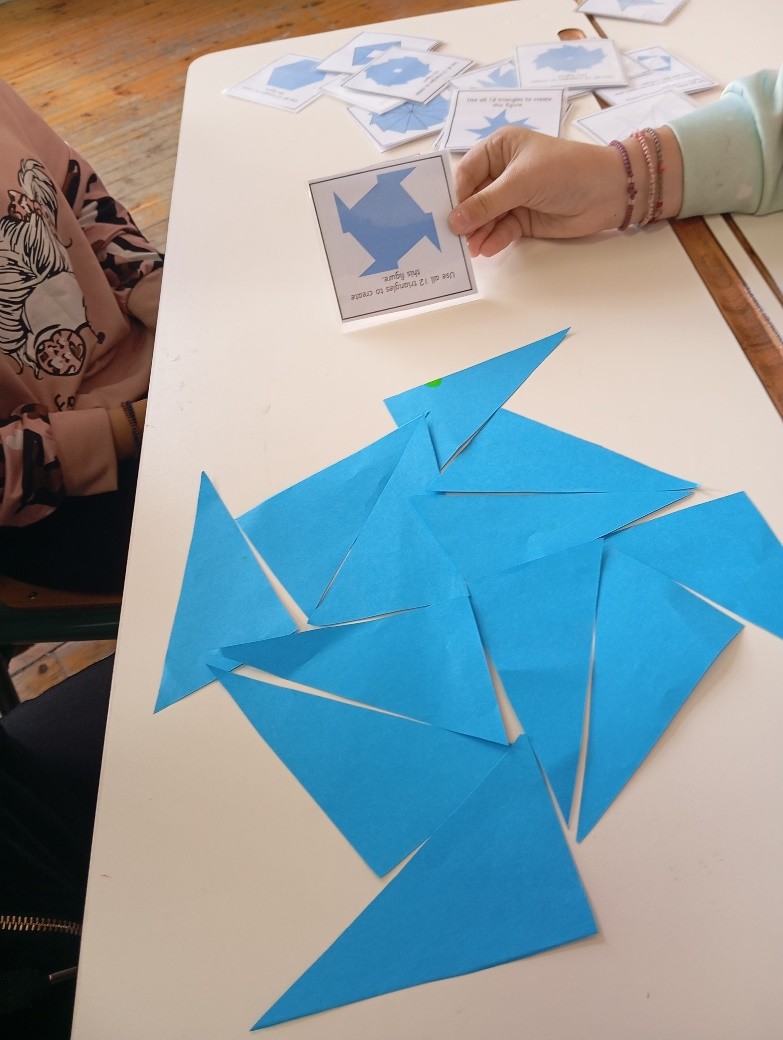
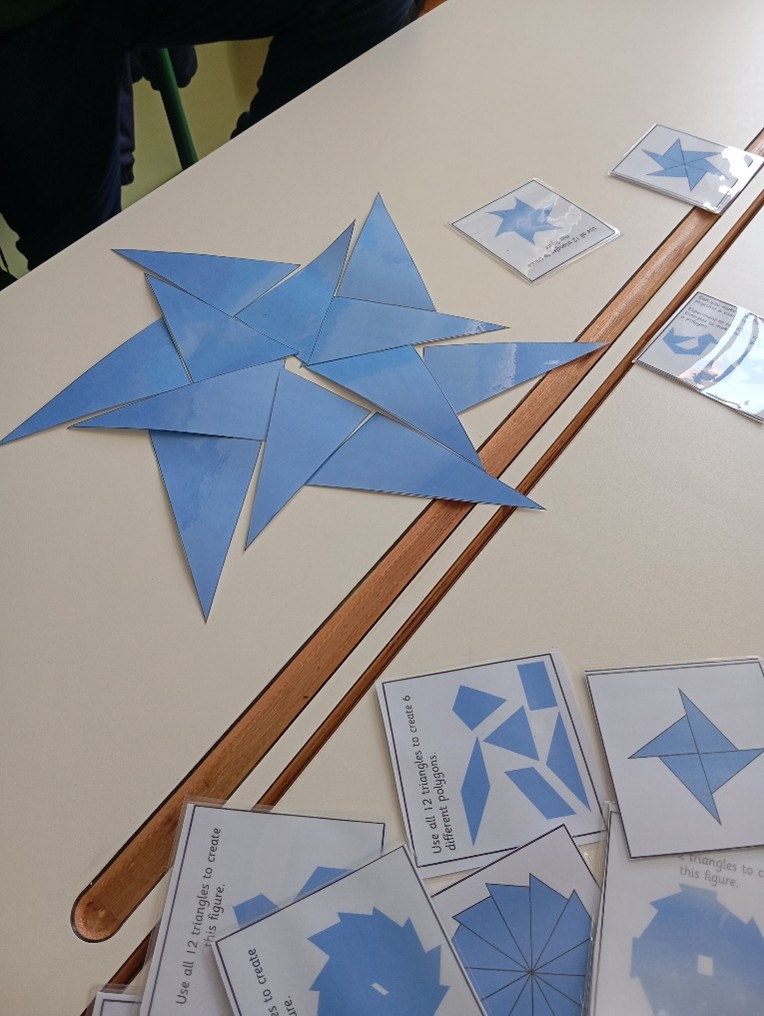
Between April 29 and May 8, 2026, the MARIAN pathway was brought to life at the Dafia Primary School on Lesvos Island. Under the guidance of teachers Georgia Andiotou and Marina Giavasi, a total of 6 innovative lesson plans were implemented. This marked an important step in the project: moving from shared training to everyday classroom practice, showing how mathematics can seamlessly blend with materials, art, history, movement, and creative technologies.
The experiences from these classrooms were later shared during the European meeting in Sofia, where teachers and partners discussed the school implementations and gathered valuable insights to improve the teachers’ guide and prepare the next phase of national training.
What Emerged from the Classrooms
From these experiences on Lesvos, a more sensory, visual, and participatory mathematics emerged. When complex concepts pass through storytelling, historical symbols, and hands-on materials, students enter the work naturally and with immense curiosity.
The true impact of this approach was best captured by the children themselves. Reflecting on the activities, the students shared their enthusiasm:
“I loved that we were able to make things with our own hands, creating something ourselves instead of just looking at something ready-made in a book.”
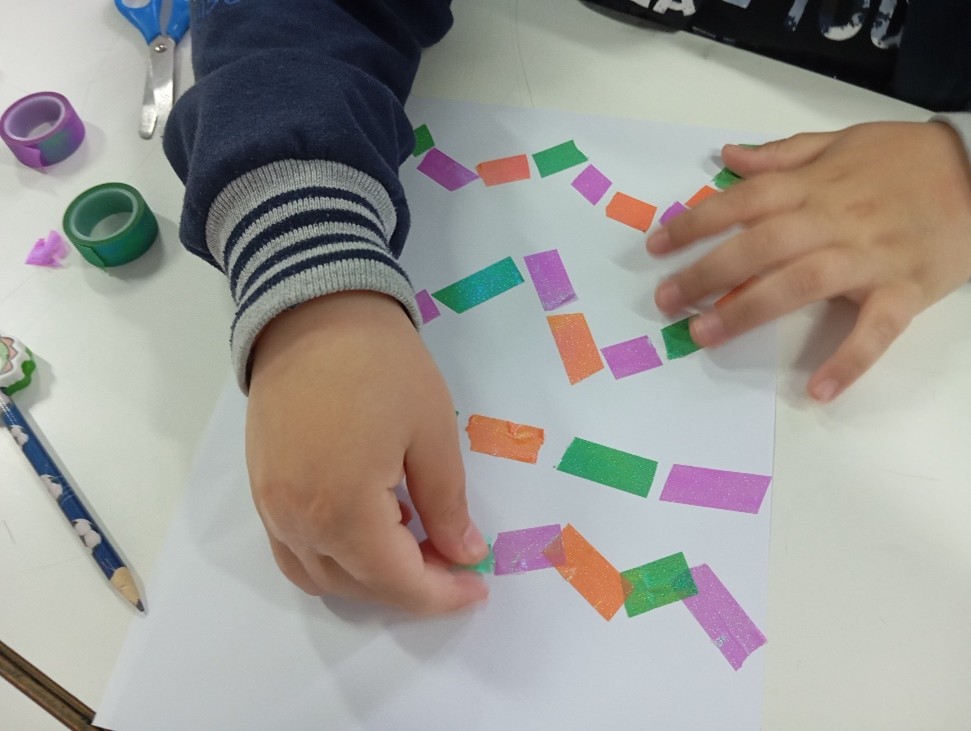
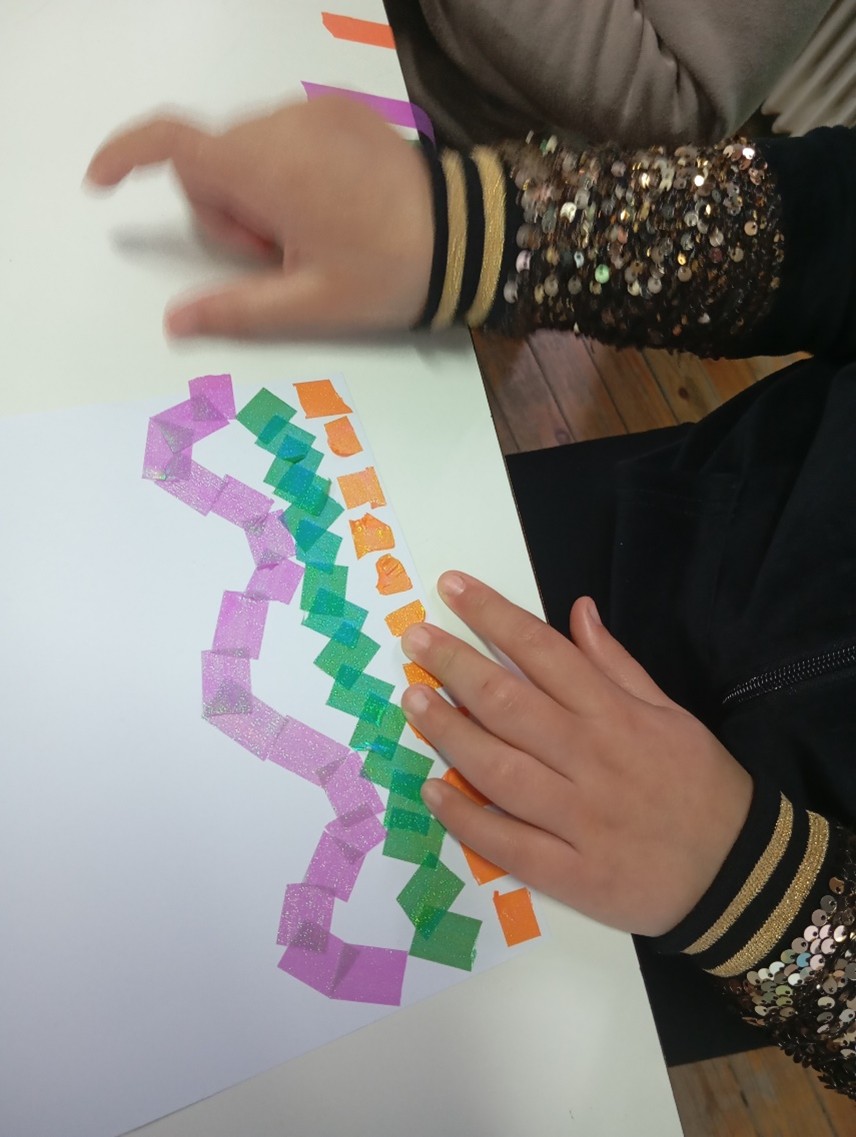
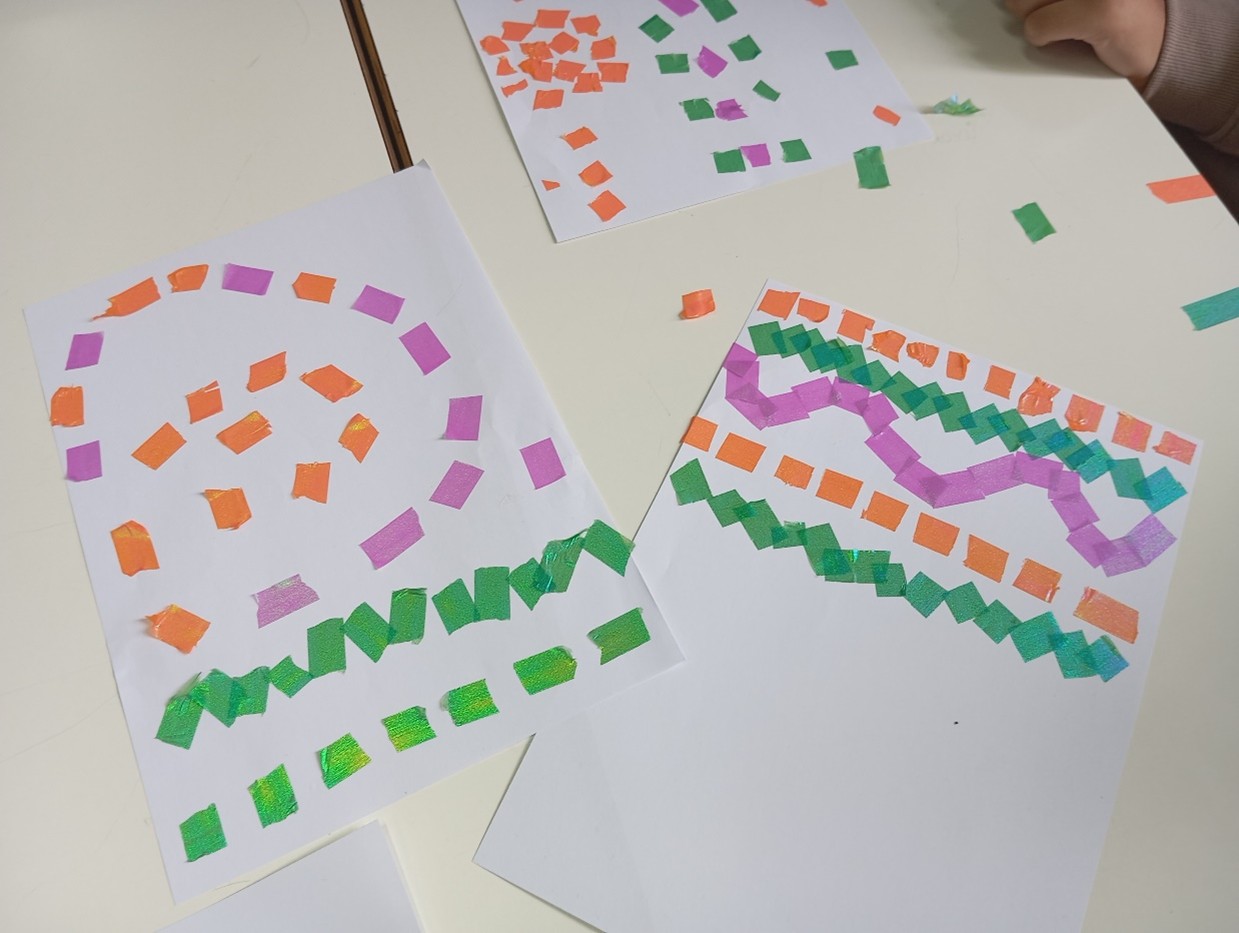
“I loved the colorful painting with the masking tape.”
The real-world connection also left a lasting impression, with another student noting:
“I liked that we worked with the orange—we learned using it and did a really nice activity.”
By shifting the focus from memorization to creation, the MARIAN project in Greece successfully proved that when children build mathematics with their hands, they truly understand it with their minds.
Exploring the Human Side of Geometry and Numbers
In the classrooms of Lesvos, mathematics ceased to be a set of static rules in a book and became a living narrative to build, touch, and transform. By blending the Montessori philosophy with history, art, and storytelling, students explored the deep, cross-cultural roots of mathematical concepts.
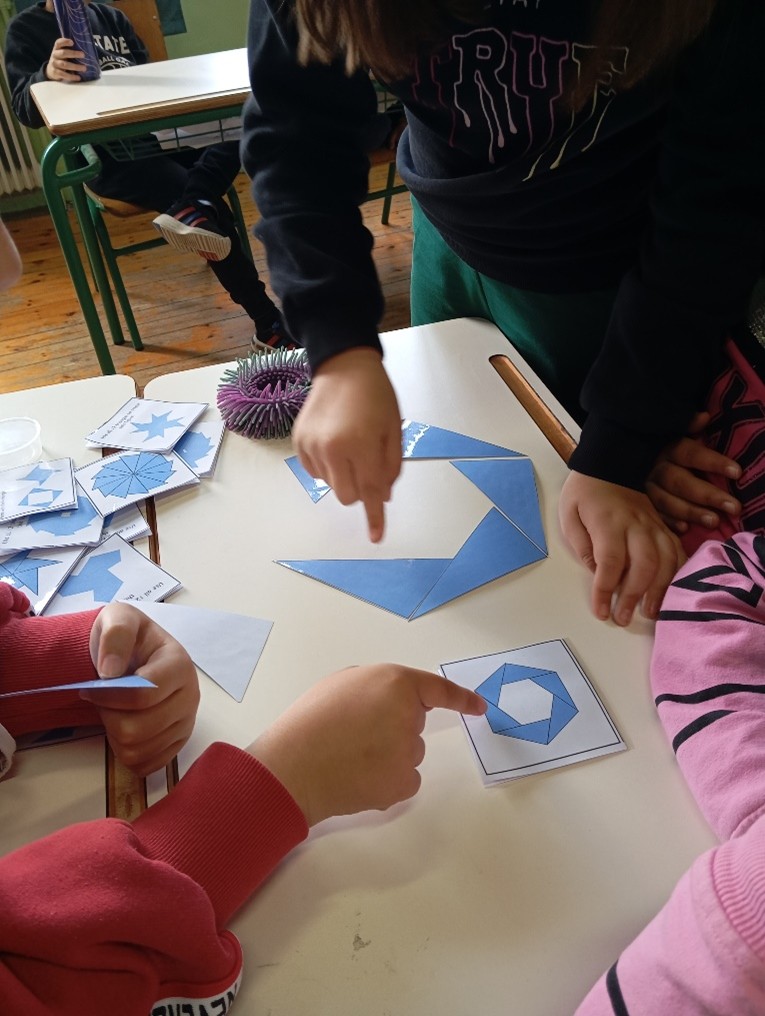
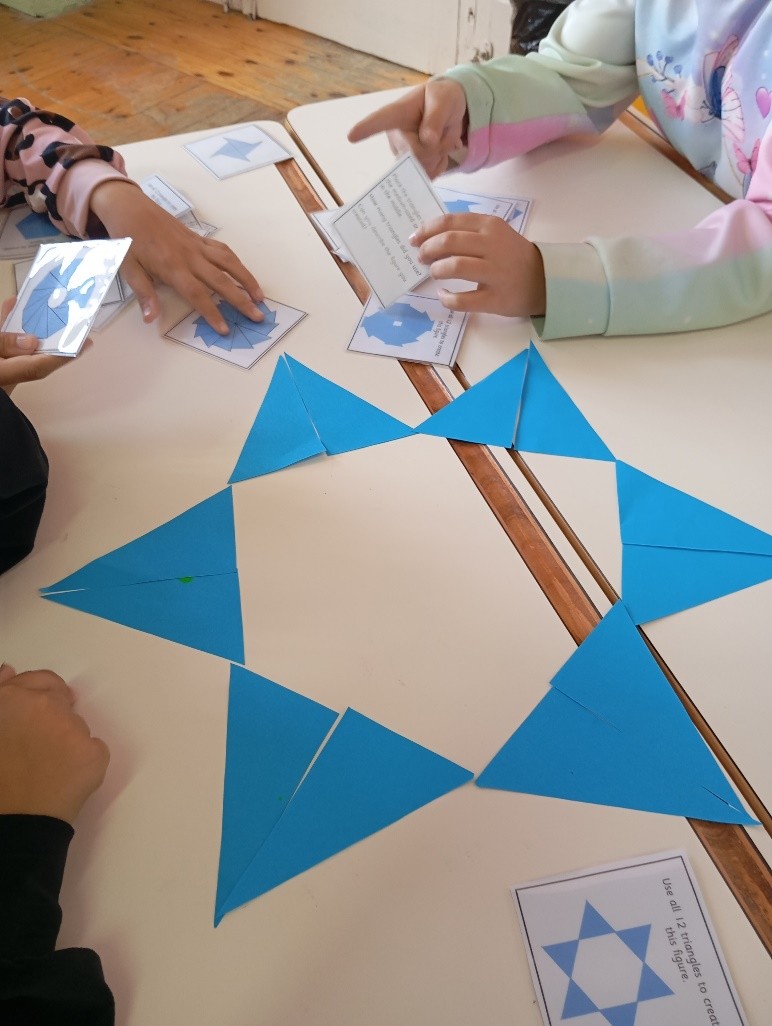
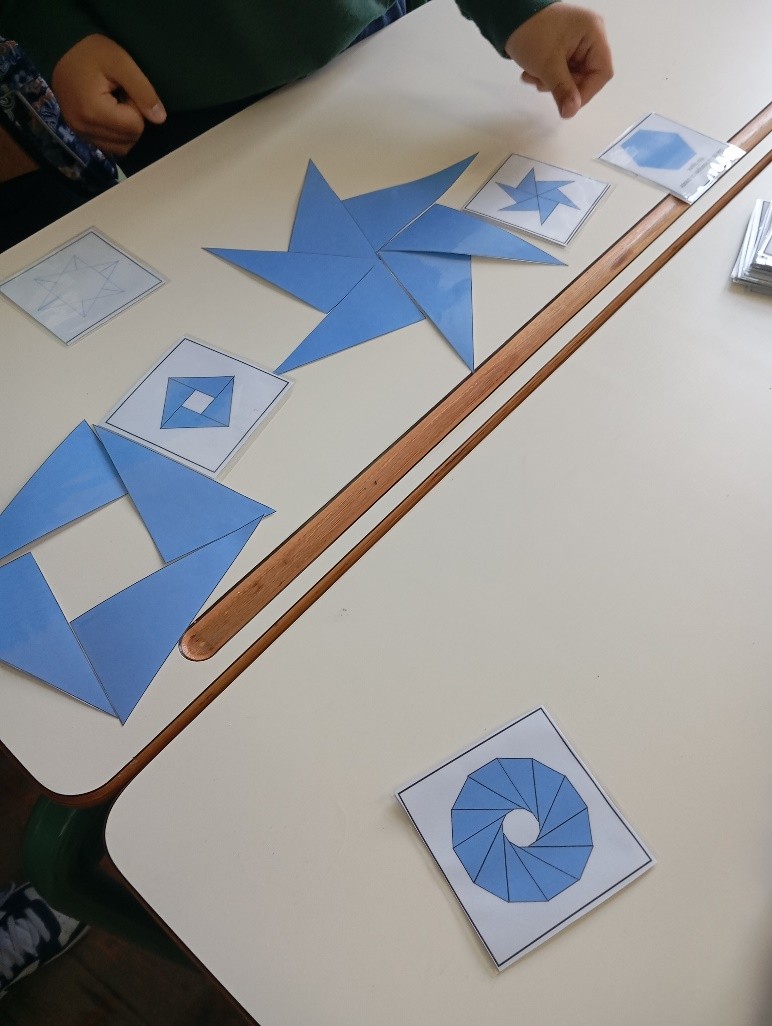
1. The Art of a Line (Una Linea)
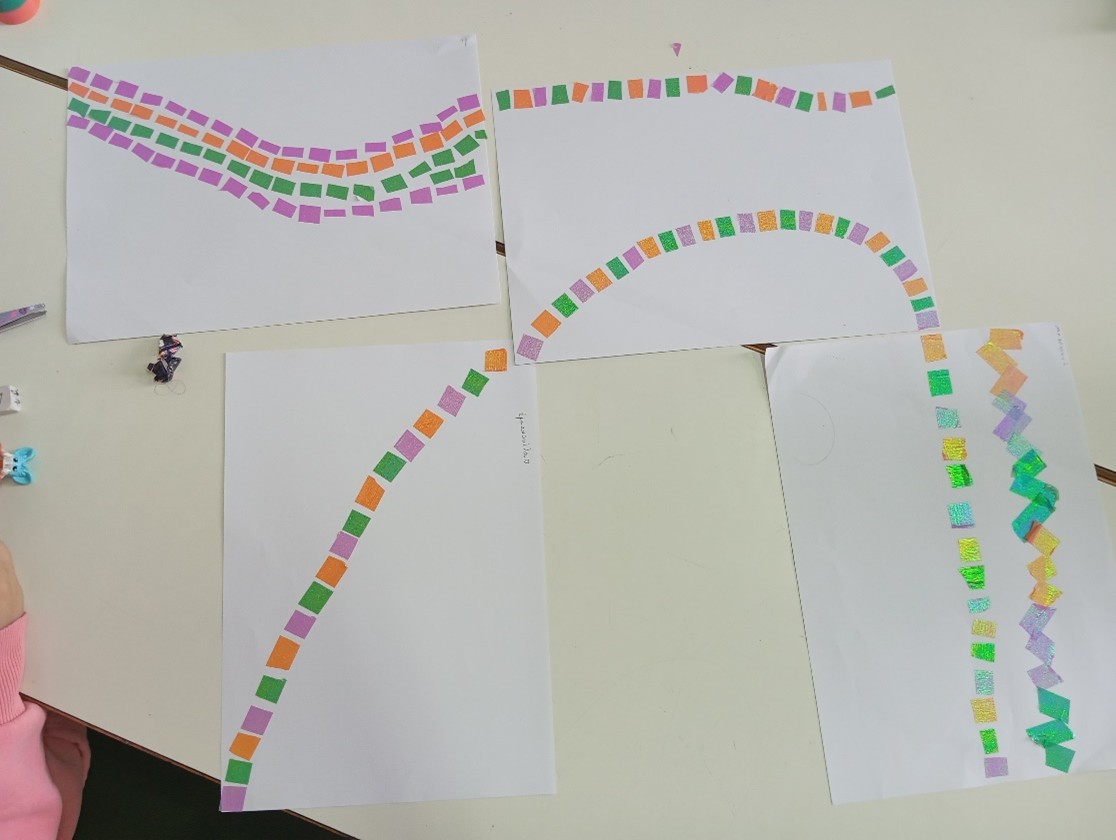
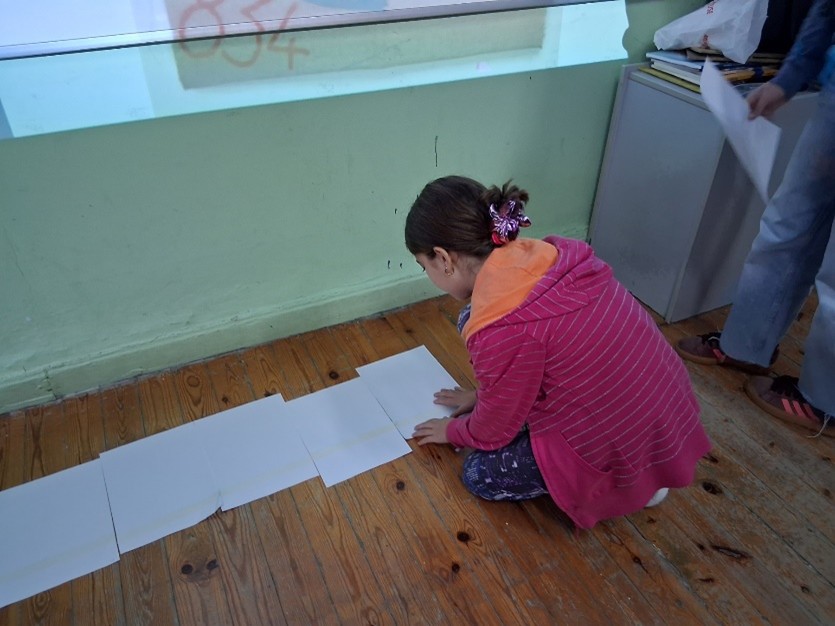
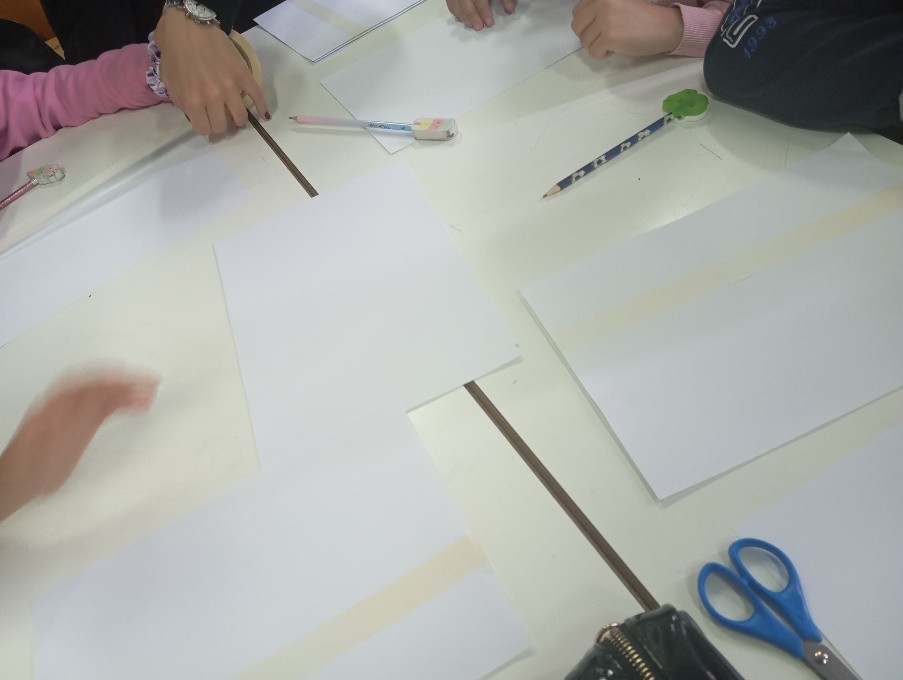
With Una Linea, the mathematical journey began not with formulas, but with art and gesture: tracing, continuing, transforming, and composing. Straight, curved, broken, open, and closed lines became active tools to build rhythm, direction, space, and relationships. In our classrooms, the line was treated not just as an abstract geometric concept to memorize, but as a physical mark able to cross the page, organize space, and create meaningful connections.
Through highly cooperative activities, the children experienced firsthand how a single, simple element can open up infinite possibilities for deep thinking. One of our students captured this sense of discovery perfectly, exclaiming: “I liked that our teacher told us about the lines and they were colorful and beautiful; I found it very nice, fantastic, and a lot of fun!”
Moving Forward
The experiences carried out in Greek schools will contribute, together with those of the other partner countries, to the improvement of the teachers’ guide and to the preparation of the next national training activities.
After the European exchange in Sofia, the MARIAN project now moves into a new phase: consolidating the tools developed, supporting teachers’ work, and continuing to build a more inclusive, concrete, and meaningful approach to mathematics.
🔗 Discover the MARIAN Project
Curious to see how these methodologies are reshaping mathematics education across Europe? To access our upcoming teachers’ guide, view classroom materials, and stay updated on our next training phases, visit the official website: